Double Digit Addition (No Regrouping)
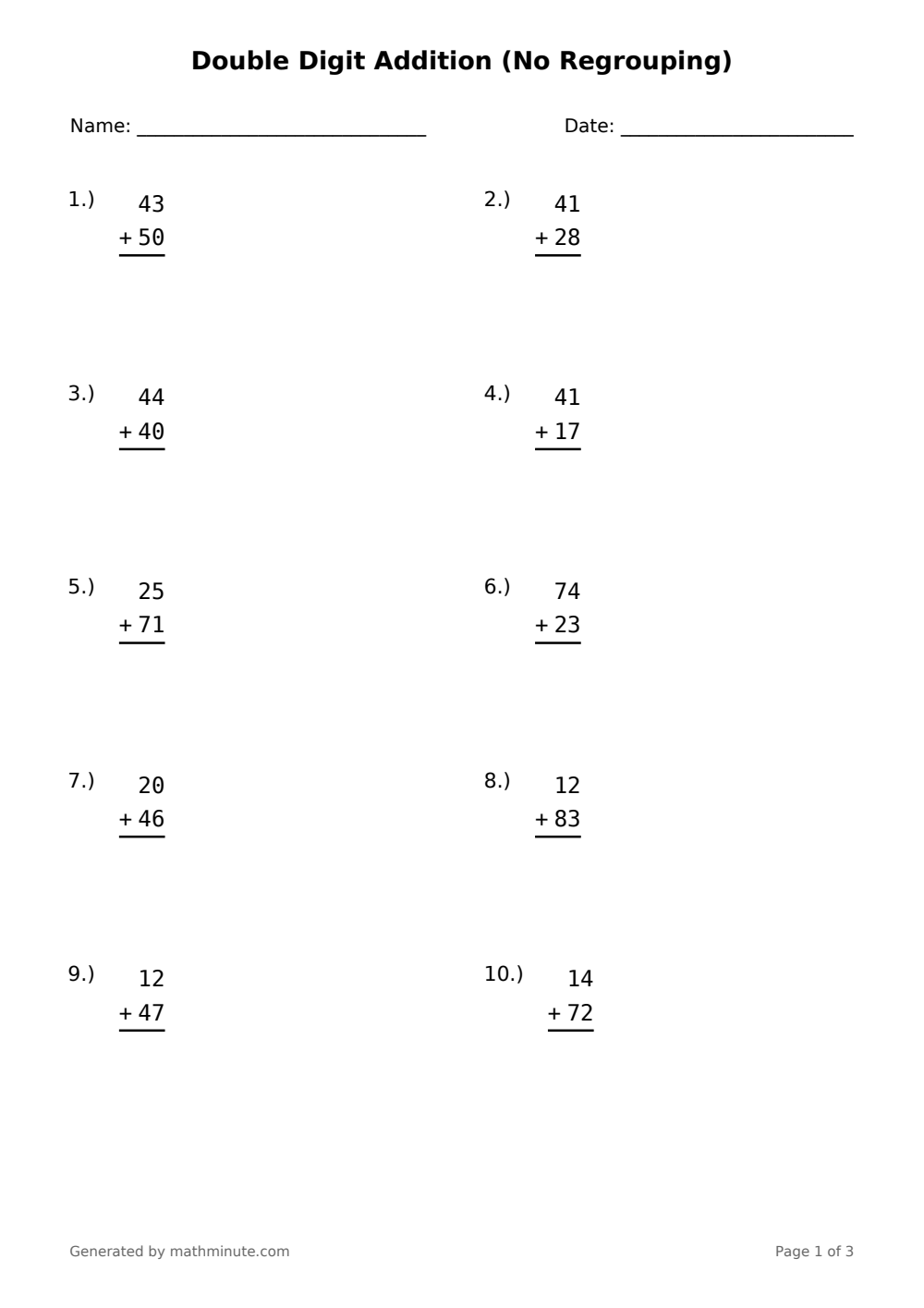
30 two-digit addition problems stacked in columns on three pages. No column adds up to 10 or more, so nothing carries and every sum stays under 100. It's usually the first column-addition sheet in 2nd grade, and some 1st graders are ready for it late in the year.
Worksheet Preview
Ones first, then tens
This sheet is about lining up place value. Have students add the ones column first, even though these problems would work in either order. The habit pays off on the next sheet, where the ones decide whether anything carries.
Estimating with the tens is a quick check. 43 + 50 is a bit more than 40 + 50, so the answer has to be in the 90s. An answer like 48 usually means the 50 got treated as a 5.
When the whole sheet goes smoothly, move on to double-digit addition with regrouping.
Frequently Asked Questions
Why start with problems that don't regroup?
They let students learn to add column by column before carrying enters the picture. Once lining up ones and tens is automatic, regrouping is one new idea instead of two.
Can students add these in their heads?
Yes, and it's worth encouraging. For 43 + 50, adding the tens (40 + 50) and then the ones (3 + 0) is the same thinking the column method writes down.
What grade is two-digit addition without regrouping?
Usually 2nd grade. Many 1st grade classes add two-digit numbers like these near the end of the year, often with base-ten blocks.